Light Rail
Spring 2012
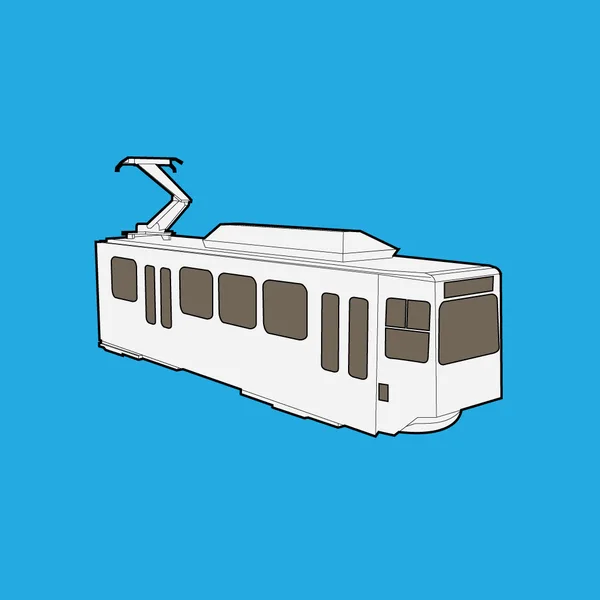
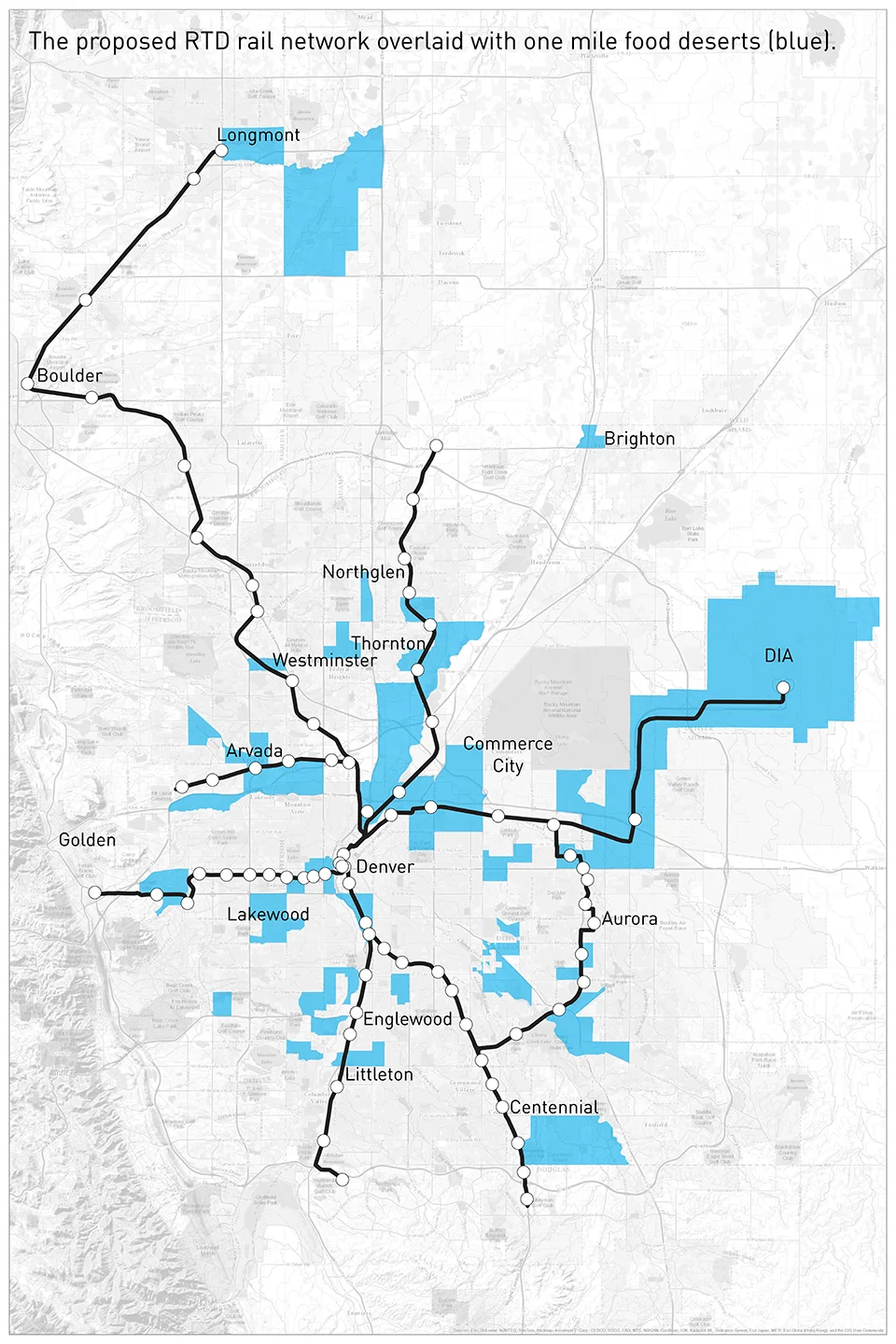
Light rail has the potential to reshape the Denver-Boulder metropolitan region in the 21st Century by becoming an inexpensive and efficient method on which local farmers and entrepreneurs could move goods, referred to as “Light Freight” as well as a means of mass transit. To the north of the metro area is a swath of irrigated agricultural land that could be used to feed the Denver-metro region, especially inner city food desserts. The northern most rail stations could act as collector/sorters of farmers’ produce and then redistribute them throughout the rail system to areas that are typically too dense to grow produce in adequate quantities. The network acts as a circulatory system for the Denver-metro region, also connecting to other neighboring regions via heavy freight rail. Furthermore, high tech producers in Boulder and Longmont could move their goods to DIA for export to the rest of the country and world. Small local artisans could move their goods to larger markets as well.
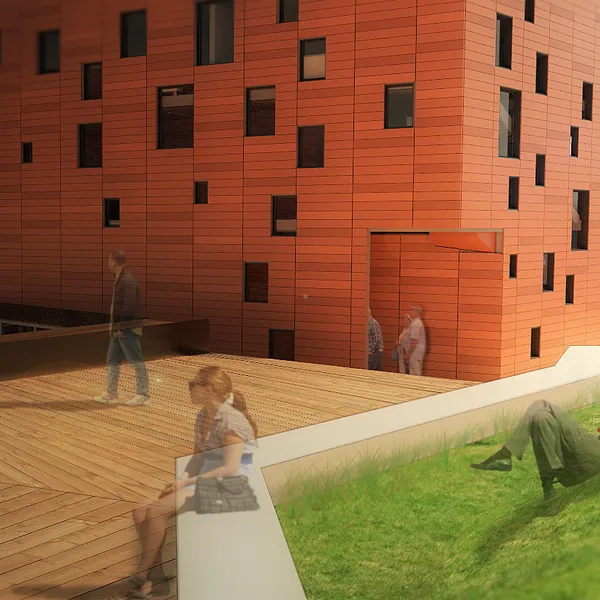
The light freight system could be catalyzed by the construction of “Co-op stores” instead of the conventional RTD Park-n-Rides. Prioritized key locations in the FasTracks system could be built first. These prioritized locations could be designated food deserts or depressed economic zones. The Park-n-Rides which are often mere surface parking lots or garages with infrastructural improvements such as pedestrian bridges and easements for Bus Rapid Transit have a minimum cost associated with them. Instead of determining that cost as a ceiling, it could be the baseline to fund the construction of these co-op stores. These key locations could be developed and operated later by a private enterprise and payed off with Tax Increment Financing.
Click to Zoom y'all!
This is the Maeklong Railway Market in Thailand. This was not the specific example that inspired me, but it is very similar.